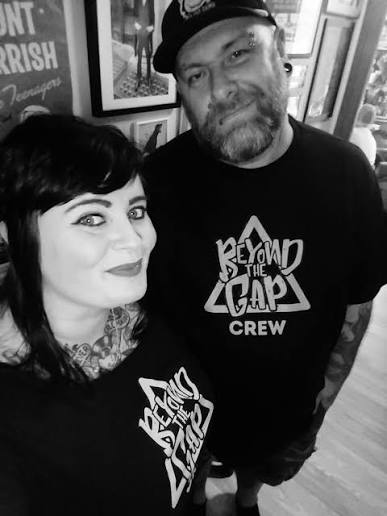
For Beyond the Gap promoters Dan and Laura, putting on punk gigs has never simply been about filling a room. It is about rebuilding a community, bringing forgotten bands back to the stage and raising money for causes that matter — even as the grassroots live scene faces an increasingly uncertain future.
For Dan, punk was never something he discovered later in life. It was practically part of the family furniture.
“My old man was a punk. My mum was a punk,” he recalls. His father was a roadie for the UK Subs and lived in the same squat as Buster Bloodvessel. The first record Dan was given was No More Heroes by The Stranglers.
His own route into putting on gigs began in Watford, where a thriving local scene gave him the opportunity to get involved. He eventually helped form the Watford Punk Collective alongside Watford John of Argy Bargy and Ray Bussey from Knuckledust, putting on shows during what he describes as a particularly fruitful period for the town’s punk scene.
Years later, after moving to Glasgow and meeting Laura, the pair discovered that they shared a passion for putting gigs on.
There was, however, one condition.
“Laura basically said, ‘We can do it, but we can do it on one condition.
And the condition is that we donate everything.’ And I said, I wouldn’t have it any other way.”
That decision became the foundation of Beyond the Gap.
Rather than treating promotion as a business, the pair decided that any money generated would go towards charitable causes. They have never taken money from the gigs themselves and, according to Dan, Beyond the Gap has now donated around £8,000 to various charities.
For Dan, the motivation is relatively straightforward: they have the time, drive, and motivation to put these gigs in while being able to positively contribute to society via their donations. The desire to give back can partly be traced back to their own circumstances. Dan can’t work full-time due to a chronic condition while Laura is a full-time carer to their son who has additional needs.
“When you are lucky enough to have the contacts, the skill set and the thick skin and the drive to do something like this, I think you almost owe it to your community to do it.”
The charitable element is only part of what Beyond the Gap set out to achieve.
The wider ambition was to help rebuild a Glasgow punk scene that Dan felt had lost some of its momentum. Alongside other promoters working towards similar goals, Beyond the Gap arrived at a moment when the DIY scene was ready for renewed energy.
“We set out to do kind of above and beyond putting gigs on and donating money to charity,” he explains. “We wanted to build a community, to reinvigorate a scene.”
That community has also helped Beyond the Gap weather criticism and rumours about its activities. Dan says that some people simply struggle to understand why anyone would put themselves through the work involved in promotion without taking a financial return.
The answer, for him, is visible in the results.
They have kept records of their donations and received thanks from every charity they have supported. In some cases, representatives from those charities have attended the gigs themselves.
“The proof really is in the fact that some of the charities, they’ve even come to the gigs, they’ve been there on the night,” he says.
His response to the rumours is characteristically blunt: “I think people just need a hobby.”
Putting on a successful show, however, is becoming increasingly difficult.
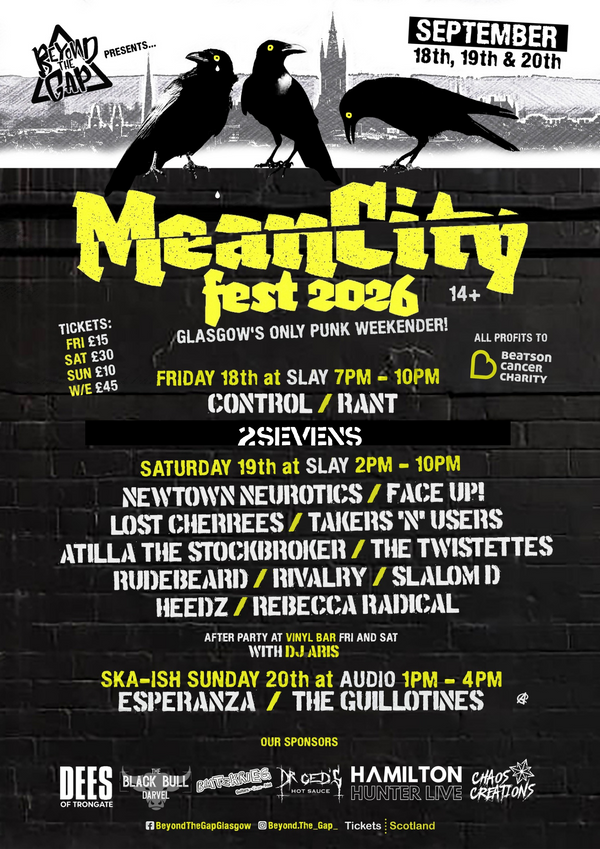
For Mean City Fest, the process begins with a wish list of bands, but that list eventually has to be reconciled with a budget. Some bands are approached because Beyond the Gap has wanted to work with them for years; others have been requested by audiences or have previously expressed an interest in playing.
Ultimately, though, there is only so much money available.
And across the grassroots scene, Dan believes the economics are becoming tougher.
“There was a real renaissance for the scene in terms of it being like a DIY scene,” he says. “But it’s almost like it’s a victim of its own success.
”As larger events increasingly offer bigger line-ups and greater spectacle, smaller promoters are finding it harder to persuade audiences through the door. At the same time, rising living costs mean that potential gig-goers simply have less disposable income.
The result is a frustrating cycle.
“People are reticent to book in advance when the first to complain when an event gets cancelled because of lack of advanced sales,” Dan says. “So you just think, well, how are you supposed to reconcile that?”
It is a problem he sees far beyond Glasgow, having spoken to promoters around the UK who are experiencing similar pressures.
Yet there is an apparent contradiction. Major events can still sell out, demonstrating that people remain willing to spend money on live music when the event feels sufficiently significant.
For Dan, that comes down partly to FOMO — the fear of missing out — and the perceived security of established events.
The danger for smaller promoters is that audiences assume their local DIY shows will always be there.
“They go, ‘I’ll catch them next time.’ There may not be a next time.”
That philosophy is central to the way Beyond the Gap builds its line-ups.
Rather than repeatedly booking the same established names, the promoters deliberately look for bands who have not played Glasgow for years, bands who have never played the city, and acts who audiences may not otherwise get the chance to see.
“[Bands] people haven’t seen for a long time or, in some instances, haven’t seen at all,” says Dan. “We love that.”
Mean City continues that approach, with acts travelling from outside Scotland alongside a strong Scottish contingent.
The inclusion of local bands is important to Beyond the Gap, but Dan does not want every show to simply recycle the same familiar names.
“There’s an element of perhaps not negativity, but there is a slight lack of imagination sometimes when you go to gigs in Glasgow,” he says. “Because it’s like running down a corridor in Scooby-Doo because you see the same bands.”
The answer, he believes, is balance.
Beyond the Gap wants Scottish and Glasgow bands represented, while simultaneously bringing in acts from further afield who audiences might not otherwise encounter.
“That’s not our niche,” he says of simply repeating the established local circuit. “What we really want to do is bring bands that people haven’t seen, won’t see and may not see again.”
For promoters in Scotland, geography is another obstacle.
Dan remembers being able to book bands easily when he was working in Watford, just a short distance from Camden. Moving to Glasgow opened his eyes to the difficulty of persuading touring bands to make the journey north.
“A lot of tour bookers aren’t rooting to include Scotland,” he says. “They seem to think that punk ends at Manchester.”
The problem is compounded by the relationship between Glasgow and Edinburgh. While audiences do travel between the two cities, there is not always enough demand to make it viable for a touring band to play both.
Nevertheless, Dan has noticed some encouraging changes. Increasing numbers of bands from Ireland and mainland Europe are beginning to build small Scottish tours into their itineraries, supported by promoters in cities including Dundee and Aberdeen.
He would like to see that trend continue.
“There’s no real reason,” he says. “If they just drove the 400 miles, they’d say that our crowds are phenomenal and they’d have a great time.”
Beyond the Gap still has plenty on the horizon.
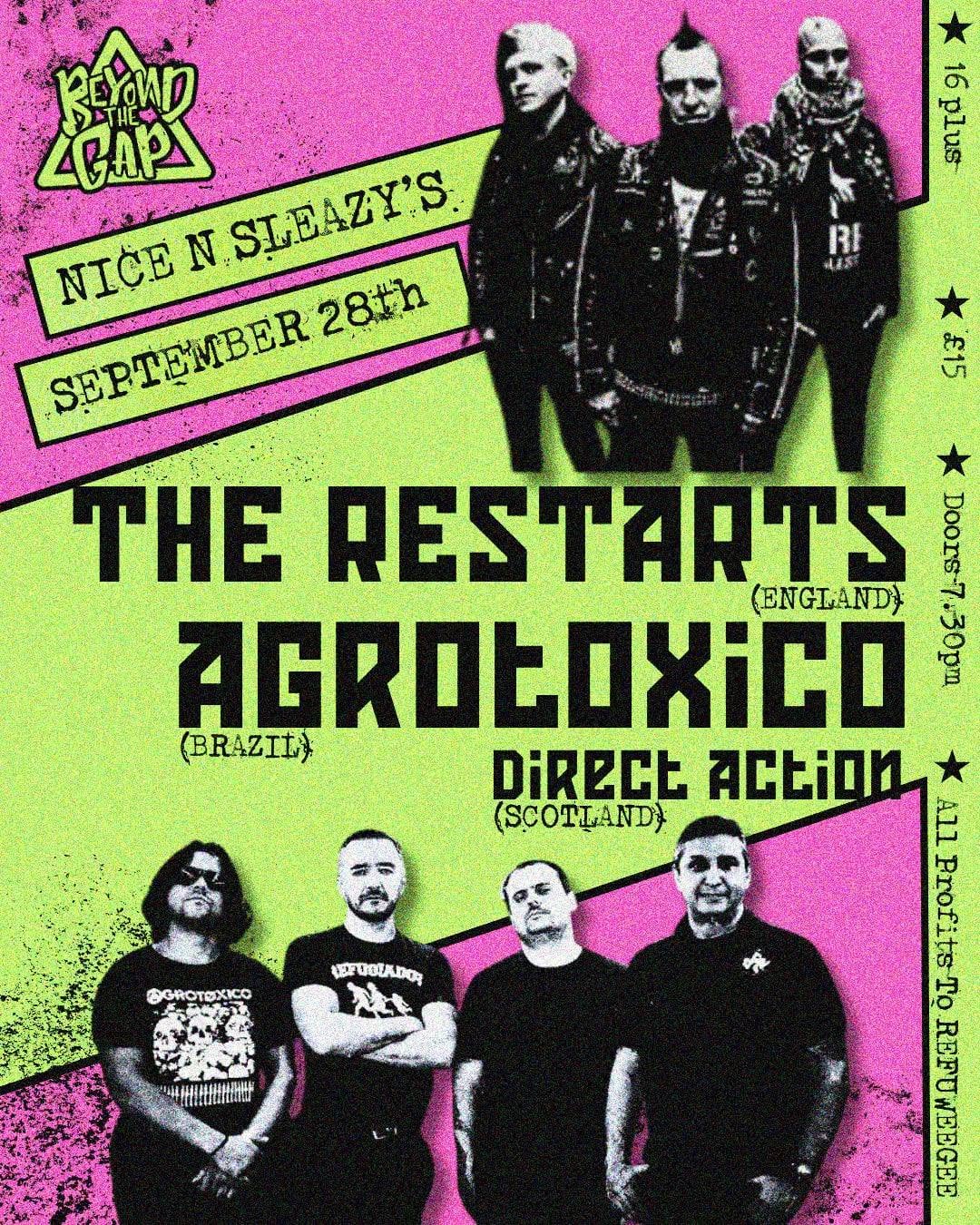
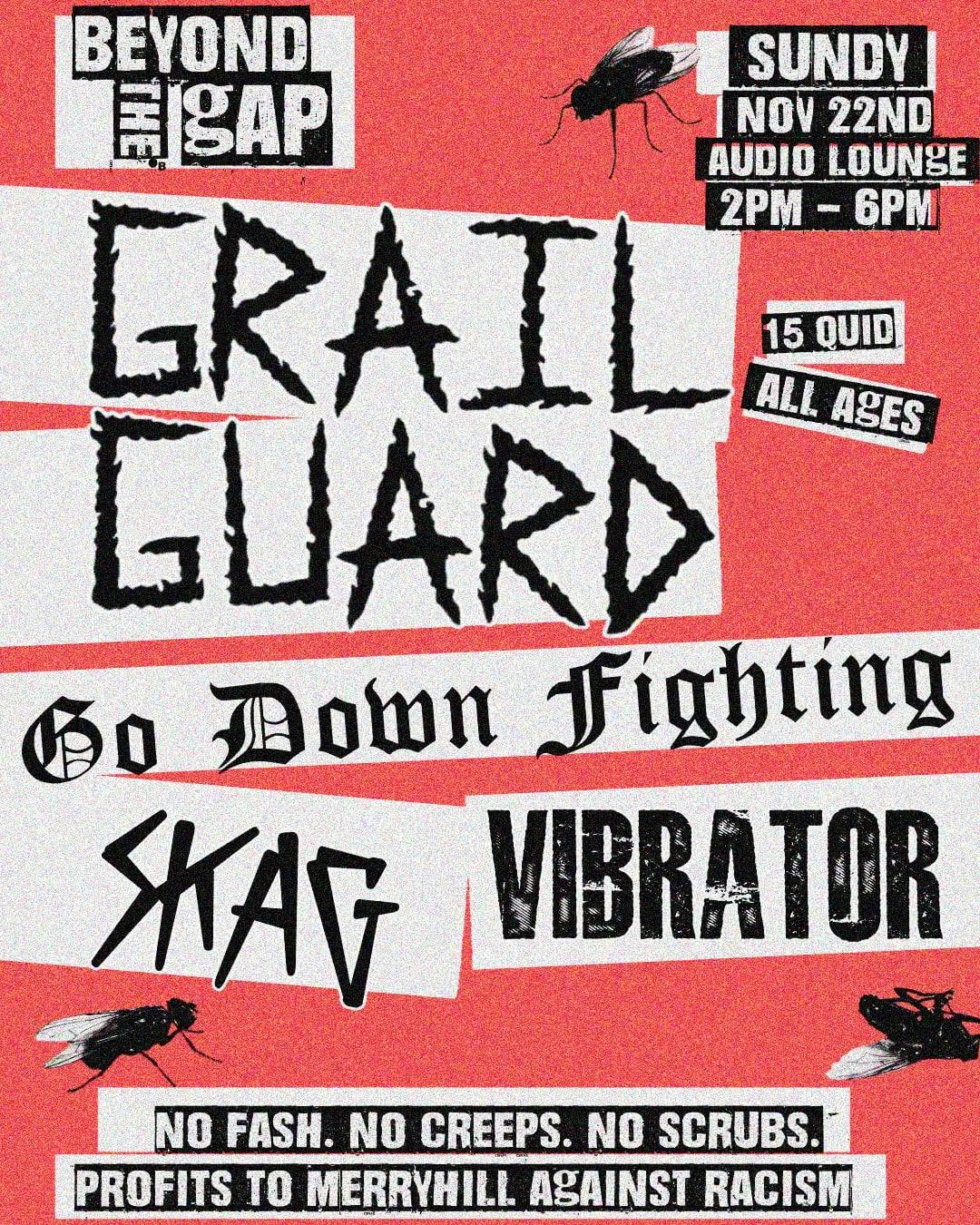
The Restarts return shortly after Mean City Fest, alongside Agrotoxico from Brazil and Direct Action. Later in the year, Grail Guard will headline a Sunday matinee at Audio Lounge — a venue Dan describes as one of their favourites in Glasgow.
But when it comes to 2027, the pair are planning to take their foot off the accelerator.
They have put on a lot of shows in a relatively short period, and Dan is keen to avoid promoting events simply because there is an opportunity to do so.
“We don’t ever want to put a gig on for the sake of putting a gig on,” he says.
Instead, the aim is to be more selective and make each event feel genuinely worthwhile.
“We’re going to be choosier,” he explains. “Really try and make them all special.”
There is also a practical consideration. Neither Dan nor Laura is getting any younger, and they know they cannot sustain the current pace indefinitely.
That makes Mean City Fest particularly important.
The charity attached to Mean City has a personal significance for the pair, and Dan says they have put everything they can into making the event work.
They have also received substantial support from sponsors, venues and the participating acts.
Many of the bands are performing for considerably less than they would normally command because they believe in the event and its cause.
For Dan, that willingness to participate is evidence of something larger than a single weekend of gigs.
“It’s a real indicator of just the positivity and community that the punk scene in Glasgow is,” he says.
That sense of community extends to the audience.
Beyond the Gap shows, he says, attract crowds that are welcoming, energetic and inclusive — people who will talk to strangers and make newcomers feel at home.
“In a time when there’s so much social division for various reasons, we don’t have that at our shows,” he says.
And that, ultimately, is what Beyond the Gap has become about.
The promoters may provide the venue, organise the bands and take on the financial risk, but without the audience there is no community to sustain.
“Without those people, it’s just me and Laura in a room with some bands looking confused.”
Ask Dan which band he would most like to bring to Glasgow and he cannot narrow it down.
The beauty of punk, he argues, is the sheer depth of its history. There are legacy acts, UK82 bands, post-punk, 1990s and 2000s revivals, contemporary punk and newer post-punk scenes — and there are always discoveries waiting to be made.
Sometimes that means finding a band that has been around since the 1970s but somehow escaped his attention. Other times it means discovering a brand-new group that has barely played to anyone.“
There’s always going to be someone that we look at and we think, we want them,” he says.
The list of possibilities is effectively endless.
“If we were to put every band that we have ever spoken about and gone, ‘Wouldn’t that be good?’, we’d have to have a gig a night for about the next decade.”
For now, though, the focus is on Mean City, the bands travelling to Glasgow, the local acts sharing the bills, and the audience that keeps turning up.
And if Dan gets his way, there may eventually be room for one more revival.
Asked what he would choose for his final meal, he opts for lasagna, a full rack of ribs and a trifle.
“Trifle will come back,” he insists. “Just like punk did.”
Perhaps, after all, he has found the next great movement.
Mean City runs from 18th to 20th September, Restarts are at Nice 'N Sleazy on the 28th September and Grail Guard hit The Audio Lounge for a matinee show on 22nd November. Tickets for all shows are available from Tickets Scotland.